
Today, SEO marketing for law firms and professional Search Engine Optimization Services are essential for attracting new clients. Search Engine Optimization (SEO) involves optimizing a law firm’s website and online content so that search engines like Google rank the firm highly for relevant legal queries.
In other words, when someone in your area searches for “personal injury lawyer near me” or “estate planning attorney,” you want your firm to appear near the top of the results. SEO is “a collection of strategies to help your website rank high on results pages”.
By using targeted keywords, high-quality content, and technical best practices, SEO marketing for law firms helps potential clients find you first.
This makes SEO a crucial component of modern marketing for law firms, in many cases more cost-effective than traditional ads or referrals. In fact, studies show organic search drives over half of law firm website traffic, so neglecting SEO means losing out to competitors online.
What Is SEO Marketing for Law Firms?

SEO marketing for law firms simply means applying SEO best practices to a law firm’s marketing strategy. It merges traditional legal marketing with search optimization. “SEO for lawyers” refers to techniques that help a law firm’s website rank higher in organic search results.
Practically, this involves crafting on-page elements (like keyword-rich titles and informative content) and off-page signals (like backlinks and citations) that appeal to Google’s algorithms.
The best SEO for law firms is not a one-time setup, it’s an ongoing strategy designed to grow visibility, credibility, and conversions over time.
For example, a modern law firm SEO still relies on things like clear website architecture and quality content. Still, it now “works in collaboration with other strategies of online lawyer marketing”.
In other words, SEO is not a one-time fix but an ongoing marketing effort. It includes building pages that answer clients’ questions, optimizing metadata, improving site speed, and earning trust signals (like backlinks and reviews).
By doing so, a law firm’s site becomes more visible when people search for legal help.
Why SEO Is Important for Lawyers

SEO is critical for lawyers because most people now search online when they need legal help. If your law firm does not appear in search results, potential clients are likely to choose a competitor instead. This is why investing in SEO marketing for law firms is essential to stay visible and competitive.
Organic search is one of the strongest drivers of website traffic and client inquiries in the legal industry. Law firms that rank higher in search results attract more clicks, calls, and consultation requests.
In a crowded market where nearly every firm has a website, effective SEO marketing for law firms can be the difference between consistent case flow and missed opportunities.
SEO also aligns with modern search behavior. Most prospective clients use mobile devices to find local lawyers, making local and mobile optimization crucial.
A well-optimized website and Google Business Profile help position a firm as credible and trustworthy at the exact moment clients are searching for legal services. Strong SEO marketing for law firms ensures your practice appears where and when it matters most.
Search engines prioritize relevance, authority, and user experience. For law firms, this means publishing clear, helpful legal content that answers common client questions, maintaining a fast and mobile-friendly website, and building trust through reviews, citations, and quality backlinks. Because legal websites fall under Google’s YMYL category, demonstrating expertise, authoritativeness, and trustworthiness is especially important.
In summary, law firms that focus on high-quality content, local SEO, and technical optimization are more likely to rank well and attract ready-to-hire clients. This reinforces why SEO marketing for law firms is not optional, but a critical long-term growth strategy.
Key SEO Strategies: On-Page, Off-Page, and Local

Effective law firm SEO combines on-page, off-page, and local strategies, all working together.
- On-Page SEO (Content and Keywords): Make sure each page is optimized for its target topic and keywords. Research the phrases clients use (see next section) and incorporate them naturally into titles, headings, and content. For example, including location-based terms (such as “divorce lawyer Omaha”) along with practice area keywords (like “personal injury attorney”) helps improve visibility in relevant searches.
- Off-Page SEO (Backlinks and Citations): These are the signals that show your firm’s reputation on the web. Backlinks from reputable legal or news sites act as “votes of confidence” that Google values. Studies show that many of law firm pages have no backlinks, making it difficult for those sites to rank in search results.
- Local SEO: Since most law firms serve specific areas, local search optimization is critical. This includes:
- Google Business Profile (GBP): Claim and verify your GBP listing. Fill out every section: business name, address, hours, practice areas, and keywords. Research shows that a complete and accurate Google Business Profile makes a law firm 2.7× more likely to be perceived as reputable. Post regularly (announcements, articles) and use GBP features (photos, Q&A, updates) to engage searchers.
- Local Keywords & Pages: Incorporate geo-specific terms in your content and metadata (e.g. “Seattle DUI attorney” rather than just “DUI attorney”). If you serve multiple areas, create separate location pages with relevant local details.
- Local Directories and Reviews: Ensure your Name/Address/Phone (NAP) is identical across all listings (Yelp, Avvo, Facebook, Bing). Encourage satisfied clients to leave Google and third-party reviews; positive reviews boost rankings. Respond professionally to reviews, which also signals engagement.
- Google Business Profile (GBP): Claim and verify your GBP listing. Fill out every section: business name, address, hours, practice areas, and keywords. Research shows that a complete and accurate Google Business Profile makes a law firm 2.7× more likely to be perceived as reputable. Post regularly (announcements, articles) and use GBP features (photos, Q&A, updates) to engage searchers.
By combining these strategies, your firm will rank better both nationally and in the local map pack. For example, an optimized Google Business Profile and active citation building were exactly the tactics used by top-ranking firms to dominate their local 3-pack.
Keyword Research for Legal Practices

Smart keyword research is the foundation of SEO. Start by brainstorming topics potential clients search for, use Google’s autocomplete, “People also ask,” and legal forums. Law firm keywords generally fall into three types:
- Informational Keywords: Questions or topics (e.g. “What to do after a car accident”) that clients ask early in their journey. Content addressing these can drive awareness.
- Commercial/Comparative Keywords: Phrases like “best estate planning lawyer” or “estate attorney reviews” where searchers are comparing options.
- Transactional Keywords: Intent-specific queries like “hire criminal defense attorney” or “divorce lawyer free consult.” These are often location-based (“near me”) and indicate readiness to contact.
Tools like SEMrush, Ahrefs, or KWFinder help expand this list. Use them to see which keywords competitors rank for and where there are “content gaps”. Remember to include geographic modifiers: a search for “personal injury lawyer” in New York City has different volume and competition than in a small town.
Google Trends can show if certain phrases peak seasonally or regionally. Also leverage free Google tools: check the “Related searches” at the bottom of results for each keyphrase, and use Google Keyword Planner for insight into search volume.
The key is to target terms your potential clients actually use. For instance, instead of generic “lawyer,” go for “car accident attorney [City]” or address specific practice areas (“divorce mediation Texas”).
Write content around those keywords, from practice-area pages to FAQs and blog posts, always ensuring the copy is helpful and relevant. In short, your SEO marketing for law firms should begin with strategic keyword research that aligns with real client queries.
Content Marketing for Law Firms

Content marketing and SEO go hand-in-hand. Creating valuable content answers client questions and establishes your firm as an authority. As Forward Lawyer Marketing explains, law firm content marketing involves consistently publishing useful, informative content (not sales pitches) that builds trust and generates leads.
Good content serves two purposes: it contains keywords that bring in traffic, and it demonstrates your expertise and empathy to visitors.
The benefits are clear: firms that blog regularly see significantly more traffic and inquiries.
Key content types for law firms include:
- Blog Posts and Articles: Write about common legal issues, explain processes, and answer FAQs. Use each post to target specific keywords.
- Practice-Area Pages: Each service page should describe the service in simple terms and include relevant keywords. FAQs, case examples, and procedure explanations boost usefulness.
- Client Guides and E-books: In-depth downloadable guides (e.g. “Your Guide to Estate Planning”) can capture leads if users provide an email.
- Videos/Webinars: Short videos (e.g. attorney answering a popular question) engage users and rank in video search. Forward Lawyer Marketing notes video’s growing importance for explaining complex topics.
- Infographics/Slides: Visually explain processes (like steps after a car accident) which can be shared or embedded in content to enrich the page.
- Podcasts: Audio content on legal issues can reach audiences on-the-go and build thought leadership.
Always aim to add value and be thorough. Forward emphasizes that educating and engaging your audience is key. Quality content also earns links and social shares over time.
Tools like AI (ChatGPT) can help generate outlines or first drafts, but be sure to review and personalize all content. Generic or superficial pages won’t stand out; Google favors sites that have deep expertise. In sum, a thoughtful content marketing strategy, integrated with SEO will drive more qualified traffic and ultimately more clients.
Technical SEO Essentials for Law Firm Websites

Technical SEO ensures search engines can crawl and users can load your site easily. For law firms, some essentials include: Implementing SEO marketing for law firms at a technical level ensures your site performs well for both Google and clients.
Site Speed:
A fast site is a ranking factor and critical for user retention. Also aiming for full page loads within ~2.5 seconds. Research shows over 90% of users will abandon a site that takes more than 3 seconds to load. To improve speed, compress images, minify code, and use a reliable hosting setup or CDN.
Mobile-Friendliness:
Google uses mobile-first indexing, meaning it primarily uses your mobile site for ranking. Ensure your design is responsive (adjusts to any screen) and navigation is thumb-friendly. As one expert points out, “the majority of your website traffic will be from a mobile device,” yet many firms only test on desktop.
Core Web Vitals:
These Google metrics measure user experience (loading, interactivity, stability). Key targets are:
- LCP (Largest Contentful Paint) < 2.5s
- INP (new responsiveness metric) ideally under 200ms
- CLS (Cumulative Layout Shift) < 0.1
Research shows that law firm sites meeting all Core Web Vitals see up to 24% lower bounce rates. Fix issues by deferring non-essential JavaScript, preloading key resources, and setting image dimensions to avoid shifts.
Clean Structure and Schema:
Use a clear hierarchy (H1, H2s, etc.) so Google understands each page’s topic. Include a sitemap.xml and robots.txt correctly. Add schema markup for legal services or local business to highlight your firm’s info in search (address, reviews, practice areas).
HTTPS and Security:
Always use SSL so your site is secure (HTTPS), a trust factor for both users and Google.
Regularly audit your site’s technical health. Tools like Google PageSpeed Insights, Lighthouse, or the Chrome UX Report can flag issues. By prioritizing technical SEO, your firm’s site will load quickly on any device and provide a smooth experience which both Google and potential clients appreciate.
Integrating SEO marketing for law firms ensures all technical improvements directly support higher rankings and visibility.
Link Building in a Legal SEO Context

Link building for law firms must focus on relevance and quality. A link from a well-known legal site or news outlet is like an endorsement to Google.
Legal Directories and Associations:
Ensure your firm is listed (with link to your site) on Avvo, Lawyers.com, FindLaw, the state bar association directory, and niche directories for your practice area. This is an important part of SEO marketing for law firms because high-quality directory links improve authority.
Local Media and Guest Posts:
Pitch stories or articles to local newspapers or legal blogs. For instance, contributing an expert commentary on a recent law change can earn a link. Incorporating SEO marketing for law firms strategies here ensures the links are relevant and help your search rankings.
Academic or Industry Links:
If applicable, publishing research, case analyses, or speaking at conferences that link back enhances authority.
Community and Nonprofit Involvement:
If you support community causes, sponsorships or partnerships can yield links from .org sites or local businesses.
Cross-linking and Interviews:
Appear as a guest on relevant podcasts or videos, or co-author content with non-competing lawyers, each presenting backlink opportunities.
Be patient and systematic. Many Interactive warns: “Your website alone isn’t enough, look for ways to get organic backlinks from other high-authority and relevant websites”. Every time
your firm is mentioned on a credible platform (with a link), Google takes note. Over time, these backlinks build your domain authority, making it easier to rank for competitive terms.
Local SEO and Google Business Profile Optimization
A Google Local Pack showing three family law firms in Denver. Notice how a strong Google Business Profile and local SEO efforts cause these firms to rank in the map results :
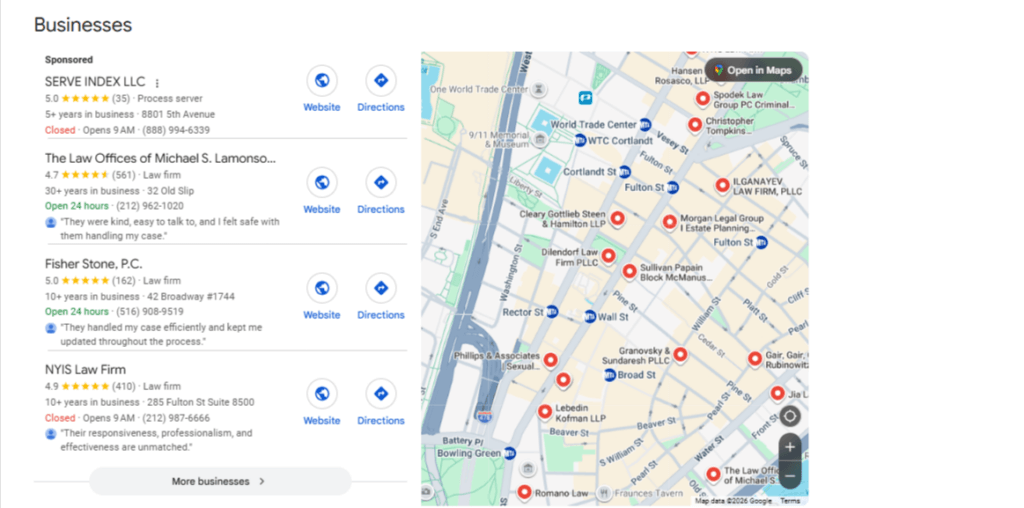
Local search is about being visible to people right in your community. For law firms, this often means optimizing the Google Business Profile (GBP) and local citations. Implementing SEO marketing for law firms ensures your firm appears in local search results and reaches potential clients effectively.
Claim & Verify Your GBP:
First, claim your free Google Business Profile. Verify it promptly (Google often sends a postcard) to gain control over the listing. Verified profiles get double the trust. Proper SEO marketing for law firms includes this step to maximize local visibility.
Complete Every Field:
Fill out your business name, address, phone, website, and especially your practice categories (e.g. “Personal Injury Attorney”). Write a clear business description using your top keywords and practice areas.
Add your logo and high-quality photos of your office, team, or events, visual content helps your listing stand out.
Local Keywords & Services:
On your website, use city or neighborhood names in titles and copy (“Seattle DUI lawyer”). FWD Lawyer Marketing advises incorporating local terms in meta tags and headings. If you serve multiple areas, create dedicated pages for each locale with tailored content (address, maps, local testimonials).
Directories and Citations:
List your firm consistently on local and legal directories: Yelp, Bing Places, Avvo, FindLaw, legal aid networks, and more. Make sure your NAP (Name, Address, Phone) is identical everywhere. Inconsistent listings (e.g. abbreviations, old phone numbers) can confuse Google.
Encourage and Manage Reviews:
Online reviews are a powerful factor. Positive client reviews on your GBP not only build trust, but Google treats them as a ranking signal. A complete GBP with reviews is 70% more likely to attract visits.
Encourage satisfied clients to leave Google reviews, and always respond professionally, this activity signals to Google that your firm is engaged.
Common Mistakes Law Firms Make with SEO

Even with the best intentions, law firms often stumble on SEO. Here are frequent pitfalls to avoid:
- Lawyer-Centered Content: Many sites focus on the firm (“We have X attorneys…”), rather than solving the client’s problem. Visitors want to know how you can help them, not just your credentials. Experts warn against a “lawyer-centered website” and recommend focusing instead on client pain points and real outcomes.
- No Clear Call-to-Action (CTA): A website exists to convert visitors into clients. Yet some firms make it hard to reach them. Always have prominent CTAs (Contact, Free Consult, Call Now) on every page. Without them, even interested visitors may wander off. Experts note that without clear calls to action, a website fails to achieve its primary purpose.
- Thin or Outdated Content: A common trap is having only basic service listings or an abandoned blog. If your content is just a page of boilerplate, Google and users will go elsewhere. Thin content cannot compete with comprehensive articles offered by others.
- Neglecting Local SEO: Assuming clients will just find you is a mistake. Many firms skip claiming or optimizing their Google Business Profile, or they neglect reviews.
- Focusing Only on Website: SEO isn’t just about your own website. Firms that treat the website as the whole strategy miss out on off-site signals. As one expert says, you must get backlinks and reviews too. Building “authority” also means engaging on social media, legal forums, and other platforms where your name appears.
- Ignoring Technical Issues: Broken links, duplicate content, missing meta tags, or poor site speed can cripple SEO. Many firms never run a technical audit. Many firms warn that if your site “can’t be fully crawled by Google, you’re never going to rank high”.
- Publishing Generic Content: With AI tools easy to use, some firms generate cookie-cutter articles. Google is adept at spotting thin AI content. Experts caution that relying on AI alone can result in content that is vague, repetitive, or simply inaccurate.
By recognizing these mistakes and correcting them your SEO marketing for law firms will be on the right track. Avoid these blunders, and you’ll save time and budget while steadily improving your rankings and leads.
Frequently Asked Questions (FAQ): SEO Marketing for Law Firms
1. What is SEO marketing for law firms?
SEO marketing for law firms focuses on improving a law firm’s website and online presence so it ranks higher in search engines and attracts potential clients searching for legal services.
2. Why is SEO important for law firms?
SEO helps law firms get discovered online, build credibility, and attract clients who are actively searching for legal help in their area.
3. How does SEO help law firms get more clients?
By ranking higher for relevant keywords, SEO drives targeted traffic, phone calls, and consultation requests without relying only on paid ads.
4. How to do SEO for law firms?
How to do SEO for law firms? Start with keyword research, optimize website pages, create helpful legal content, improve site speed, earn backlinks, and focus on local SEO.
5. What makes the best SEO strategy for law firms?
The Best seo marketing for law firms focuses on long-term growth through quality content, strong local visibility, technical optimization, and authoritative backlinks.
6. How long does SEO take to show results for law firms?
Most law firms see initial results in 3–6 months, while strong and consistent rankings usually take 6–12 months.
7. Is local SEO important for law firms?
Yes, local SEO helps law firms appear in Google Maps and local search results, which is crucial for attracting nearby clients.
8. What role does content play in law firm SEO?
Content helps answer client questions, improve rankings, build trust, and demonstrate legal expertise to search engines and users.
9. What is the biggest mistake law firms make with SEO?
A major mistake is treating SEO as a one-time effort. The Best seo marketing for law firms requires ongoing optimization and updates.
10. How to do SEO for law firms effectively in competitive markets?
In competitive areas, How to do SEO for law firms? effectively means targeting niche practice areas, creating local-focused content, and earning high-quality backlinks.
Ready to Grow Your Law Firm Online?
We provide the best SEO marketing for law firms, helping you rank higher in Google, attract more clients, and dominate your local market. Contact Icnofy Technologies now to get started and see how our expert team can handle how to do SEO for law firms for your practice from start to finish.